
These are urgent times. The AfD’s electoral advance in the German state of Saxony-Anhalt underlines the threat from fascism across Europe and many other parts of the world. It also highlights the collapse of the mainstream parties and the crisis of capitalist democracy.
The French presidential election next year is another key staging post. Campaigning has already started, and debates about it are sweeping across the whole political spectrum. Here’s an introduction for those who are unfamiliar with some of the names and context.1
When is the election?
On 18 April and 2 May 2027, French voters will go to the polls to elect a new president to replace the neoliberal “centrist” Emmanuel Macron. The outgoing president, who has been in office for two terms, cannot run again.
How does the election work?
The president is elected to a five-year term under a two-round system. Lots of candidates usually stand in the first round, but (as is almost certain) no candidate secures an absolute majority (50 percent + 1) of votes in the first round, a second round is held two weeks later. This is between the two candidates who receive the most votes.
The great battle for most forces is to get into the second round. There is plenty of room for deals, bribery and threats. All the conservative right wingers (and many on the left) will say “We need one candidate from our camp to reach the second round.” But then there is the small matter of who that should be, with each candidate preaching unity so long as they are the beneficiary.
For now, seven months ahead of the first round vote, the central fight in conventional politics is to define who will be the traditional right’s candidate and who will be the mainstream left/neoliberal centre one.
For socialists, the focus is on how to beat the fascists, the advance of Jean-Luc Mélenchon and his La France Insoumise (France Unbowed) party, and how to grow revolutionary forces.
Three basic points
Struggle first: Elections matter. It will make a big difference who becomes French president. But the militancy of the working class and the confidence and size of anti-racist and socialist forces matter more.
Whatever happens in the vote, beating the racists and the fascists won’t be achieved at the ballot box. It needs a militant movement on the streets and in the workplaces, and a socialist spine inside all the forces of resistance that offers hope and a positive alternative to the fakery of the far right.
And there are crucial fights now in France over issues such as the austerity budget (due on 30 September), new attacks on migrants, money for war, not welfare and increased tuition fees for international students.
Serious resistance over these issues, and many others, can transform the political background to the election, and shift the main focus from the institutional sphere to one linked to struggle.
The great global movement for Palestine has shown the potential for huge fightbacks from below.
Wanted: a bigger united front versus fascism: The fascists of the National Rally (Rassemblement National, RN) have to be confronted through street mobilisation and relentless, consistent work in the working class. This is possible. Some on the British left suggest French activists have wholly failed to construct united activity against the fascists and racism. That is wrong.
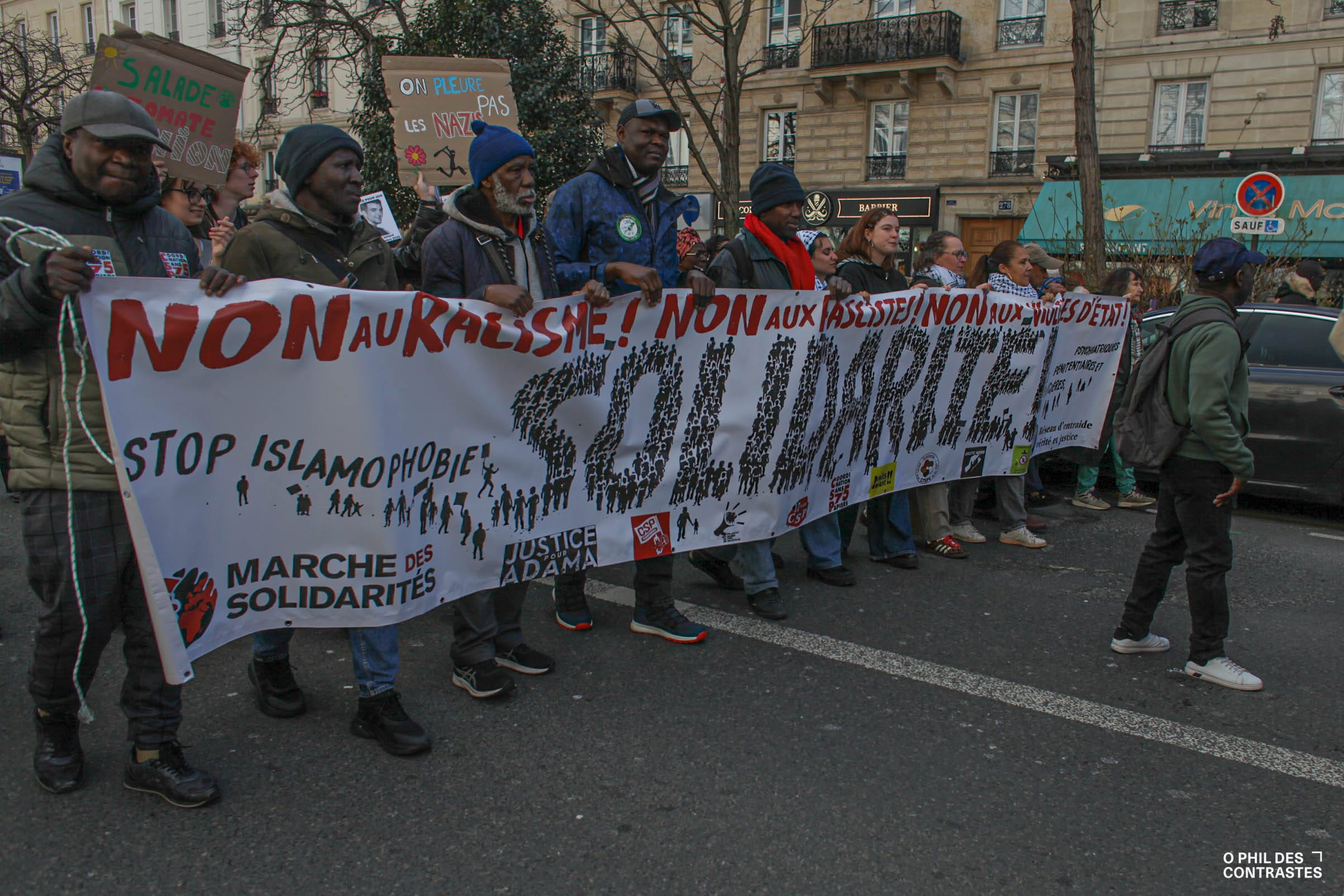
The front may still be too small and narrow for the task, but there have been, and are, real efforts to secure a powerful response to the RN. The Marche des Solidarités (March of Solidarity, MDS) organisation brings together numerous organisations.
MDS has done exemplary work at the grassroots among undocumented migrants. It has confronted state racism with militant mobilisations. Much remains to be done in winning greater support from trade unions and left parties. Nobody, however, should sneer at what MDS has done.
This work is crucial because the fascists are much weaker on the streets, at work and in neighbourhoods than they are in the ballot box. Broad but militant organisation can hurl back their assaults and contest state repression and racism.
The mainstream parties (and the Communist Party) have aided the fascists by conceding to their anti-migrant and Islamophobic arguments. They demand more and more money for the military and war, less and less for wages and key services. This creates a pool of bitterness which the fascists can draw on.
By the end of 2027, France, Italy, Spain and Poland will all have held national elections. That is four of the EU’s largest economies. France has to be the pioneering victory against fascism.
On the website of the Autonomie de Classe revolutionary group, there is a very good example from the city of Brest of organising at the grassroots against the fascists.
The need for socialist politics: for revolutionaries the task is not to resuscitate the bankrupt mainstream but to gain from the crisis of the “extreme centre”. It is to emerge with a much stronger working class, bigger struggles against all forms of exploitation and oppression, and a more dynamic and effective revolutionary formation.
The fascists
The RN candidate Marine Le Pen leads every opinion poll for the election. The fascist launched her campaign with a renewed Islamophobic threat to "penalise the wearing of the Islamic veil" with "a fine" if it comes to power. RN MP Jean-Philippe Tanguy, Le Pen's lieutenant in the presidential election, stated, "We will obviously fight Islamist ideology and we will penalise the wearing of the veil.”
An RN victory would be a boost to the far right and fascists across the world. It would be the signal for another appalling surge in racism and a huge setback for the whole working class.
If Le Pen wins, it will not be like Hitler becoming chancellor of Germany in 1933 as the RN does not yet have a mass movement on the streets. However, it would not just be Macron’s racist regime with a small upwards twist.
President Le Pen would seek to impose even harsher laws against Muslims and migrants. The RN would promote the total impunity of the police and try to break trade union power. It would insert its supporters in every state institution, every police authority, every health and education board.
The French state would create an even more ruthlessly hostile environment towards minorities and the left. Perhaps most significantly, Le Pen would embolden the street thugs who seek to carry out a fascist programme “from below”. The fascists’ ambition has not changed. They want to smash working-class organisation and extirpate democratic spaces.
France has to be the pioneering victory against fascism.
For many months it seemed unlikely Le Pen would be able to stand after a court found her guilty of misusing €4.3m (£3.7 million) in public funds in a fake jobs scam at the European Parliament between 2004 and 2016.
But earlier this year judges reduced her five-year ban from public office to 45 months, with 30 of them suspended.
As the 15 months of ineligibility matched, almost to the day, the time that Le Pen has served since her first conviction in March 2025, she will be eligible to stand in April 2027.
The judges also reduced her initial four-year sentence to three years in prison, two suspended, with the remaining year to be served outside jail but wearing a tag—which won’t be applied during the election campaign as she is appealing to a higher court.
If she had not been able to stand, Jordan Bardella would have been the RN candidate. He is from the “new generation” of the RN, which worries less about fake populist promises to snare workers and is more openly pro-boss and pro-capitalist.
Le Pen is associated more with claiming to be for “ordinary people”. In the recent first presidential debate, hosted by the bosses’ MEDEF organisation (the equivalent of the British CBI), for example, she falsely said she was on the side of workers.
She proposed a retirement age of 60 for those who started working before the age of 20 and had contributed to national insurance for at least 40 years, followed by a gradual increase to 42 years and a legal retirement age of 62. This is slightly better than Macron’s plan to raise the pension age, which saw a great revolt and mass strikes in 2023.2
Le Pen added this could be financed with racist policies targeting immigrants, who, according to her, “cost our social welfare system a great deal”.
But she also tried to woo her gilded audience with some of her most pro-business policies ever. Her pledges included the elimination of the business value-added tax (CVAE), the business property tax (CFE), the social solidarity contribution of companies (C3S) – which contributes to financing old-age insurance – and no fewer than 130 other taxes and levies she deemed “unproductive .”
She also defended the “Dutreuil Pact”, which allows for a 75 percent reduction in the taxable value of businesses upon inheritance, and cuts to production taxes, which she presented as “the enemy of reindustrialisation.”
Le Pen was clear that “The State has a role which is essential, which is to create the conditions for a maximum economic environment, that is to say, to put in place the conditions so that you entrepreneurs can create wealth.”
She added an austerity programme with £108 billion of cuts.
This won applause from the chief executives in her audience, but leaves her vulnerable to attacks that she is for the rich.
Le Pen is not the only fascist who might be on the ballot paper. Eric Zemmour, standing for his Reconquête party, will grab some votes if he stands, as he did last time. He puts forward a vile mixture of Islamophobia, racism toward migrants, sexism and homophobia. In many ways, his views are more openly racist than Le Pen’s.
Zemmour has several convictions for racist hate speech and advances the “great replacement” theory peddled by fascists. It claims that white Europeans are being replaced by immigrants.
He has described Muslims as “colonisers”, proposed a ban on first names such as Mohammed and called for two million migrants to be returned to their countries of origin.
Mélenchon and LFI
Mélenchon is by far the most high-profile left winger in the French political scene. He has played a crucial role (particularly recently) in opposing Islamophobia and not backing off from strong opposition to Israel, despite frenzied and false claims that his support for the Palestinians is antisemitic.
He says without a shred of defensiveness, “‘When I was born, one in ten people had a foreign grandparent. Today it’s one in three, and I started saying, ‘We are the new France’”.
At his best, he seems to offer an inspiring vision: “We want to represent the proletariat, the gig economy workers, the educated girls who are looked down upon, the lost boys who want to make it”. Mélenchon continues, “In families from formerly colonised countries, we’re talking about the second or third generation of French citizens. And all these people have a political culture shaped by liberation struggles and the fight against colonialism. They have a political awareness. They calculate, they reflect. Their family culture is politicised. They understand everything. And they no longer allow themselves to be manipulated by the old left that used to control them.”
He understands the stakes today, saying recently,
“The Republic is on fire and is breaking apart. But the dominant ones have other obsessions to propose to you. We see the great conversion of the right wing and the centre parties to a unified ideological bloc with the National Rally. They are already there, all of them lined up … those who, seeing us advancing towards victory, are already starting to say: rather Hitler than the Popular Front.”
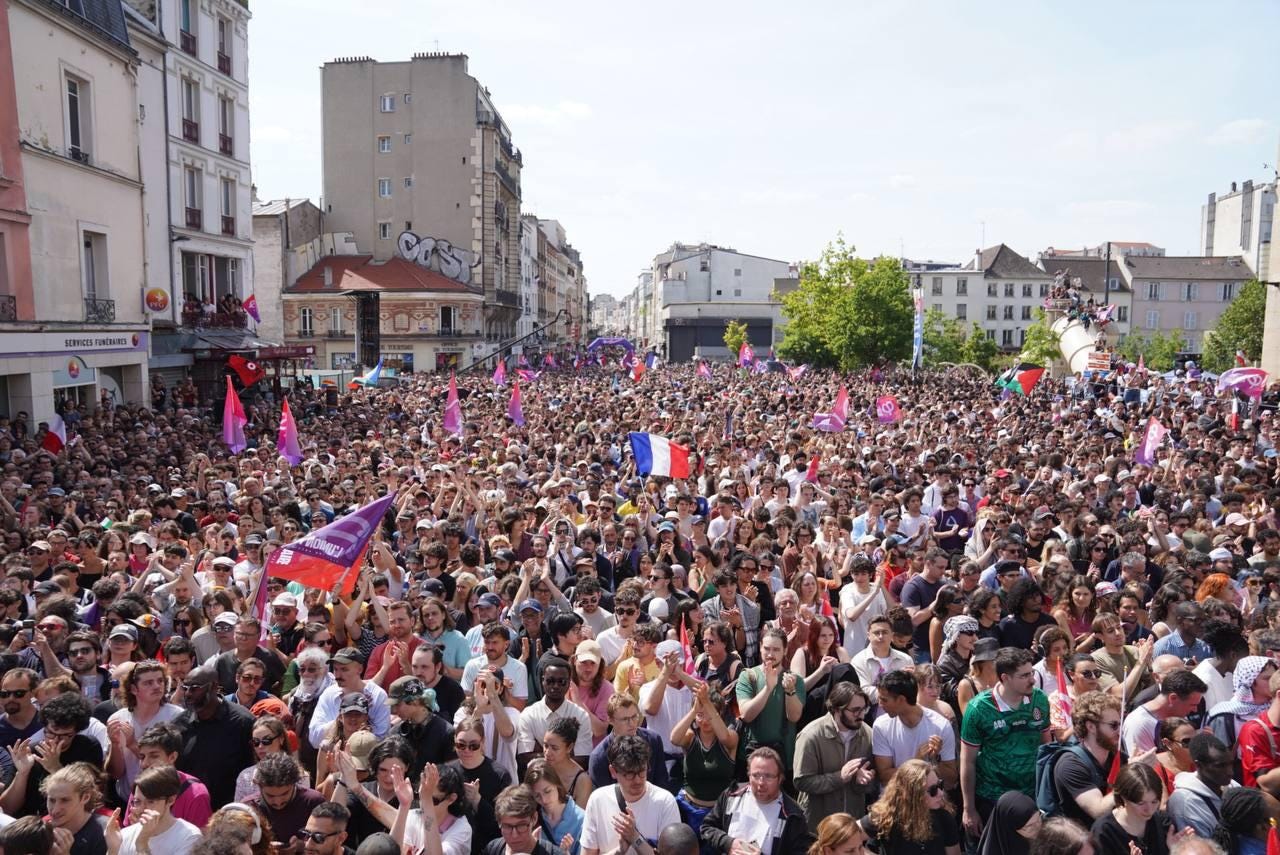
Mélenchon’s campaign is already generating mass enthusiasm with big rallies and a major network of local support committees. He leads in the polls among young people.
Those of us who have watched the horrors as Your Party exploded on the launchpad may be permitted some envy of LFI’s punch and swagger, although we should remember it has no real democratic structures, even fewer than those suggested for Your Party.
And LFI substitutes the role of the working class with a category of the “people” and opposes the particular form of capitalism that exists now rather than capitalism itself. LFI takes on the networks of the rich without locating them in a system of profit and elite ownership. So, when it rages against the system, it is against a particular expression of capitalism, not the entire way society is organised.
And Mélenchon is caged within traditional political methods. He won nearly 8 million votes in the first round of the 2022 presidential election. But he never attempted to turn that base into a fighting force against war, austerity and racism. It was just a useful electoral asset.
Despite all these drawbacks, a Mélenchon win would be hugely important―and it is possible. Many opinion polls show him running second, ahead of the Macronites, the PS and the conservatives.
His basic programme of retirement at 60, a wealth tax, price controls, a higher minimum wage and action on climate catastrophe and against Israeli genocide is attractive to millions. It’s a refreshing change from the serried ranks of those who hunt migrants and lick the bosses’ boots.
Mélenchon could achieve another boost if the Green candidate Marine Tondelier folds her campaign and backs him. There is pressure on her to do this from a section of her membership, although a substantial number of “old school” ecologists are deeply against Mélenchon.
Yannick Jadot, who was the Green presidential candidate in 2022, has come out for the “centrist” Raphaël Glucksmann.
The reformist right: the Socialist Party (Parti Socialiste, PS) and its allies
The rough equivalent of the British Labour Party, the PS had the presidency as recently as 2017. But it is now trying to hang on to some sort of influence after a near-death experience at the last presidential election in 2022. Its candidate at that election, Anne Hidalgo, grabbed just 1.75 percent of the vote—and came in a humiliating tenth place.
PS fortunes revived when it was given CPR by Mélenchon and the New Popular Front which urged support for a large number of its candidates at the 2024 parliamentary elections. The PS’s localist roots, decades of patronage, assistance from some union leaders and backing from the wider left helped it secure 63 MPs, far more than the 27 it had in 2022.
The PS is now torn by the competing pressures of retaining lucrative parliamentary positions and its desire to keep in with powerful corporate and state interests. On the one hand is the recognition that it could lose a lot of MPs without Mélenchon’s assistance, but at the same time it knows big business hates the idea of a radical left president. In the end thePS will always come down on the side of the system and big business.
The PS played a key role at the end of 2025 and the beginning of 2026 in temporarily stabilising a parliamentary crisis and enabling the right-winger-turned-Macronite Sébastien Lecornu to be prime minister and ram through austerity.
Now the PS sniffs the potential, even if a remote one, to emerge as the focus for a post-Macron liberal grouping which would be just left enough to pose as an alternative to the fascists, but completely unthreatening to the rich. The PS might not be many people’s first choice, but perhaps, it calculates, it could be enough people’s grudging choice when everything else is exhausted.
A long list of possible PS candidates are trailing their credentials at the moment. They include the party leader Olivier Faure, who isn’t popular with PS members and recently lost some key votes inside the party about how to select its candidate. More remarkably, Francois Hollande, the man whose disastrous term as president from 2012 to 2017 was the specific trigger for the PS’s present demise thinks he can be the candidate
Another person keen to run is Ségolène Royal, the defeated Socialist presidential candidate in 2007.
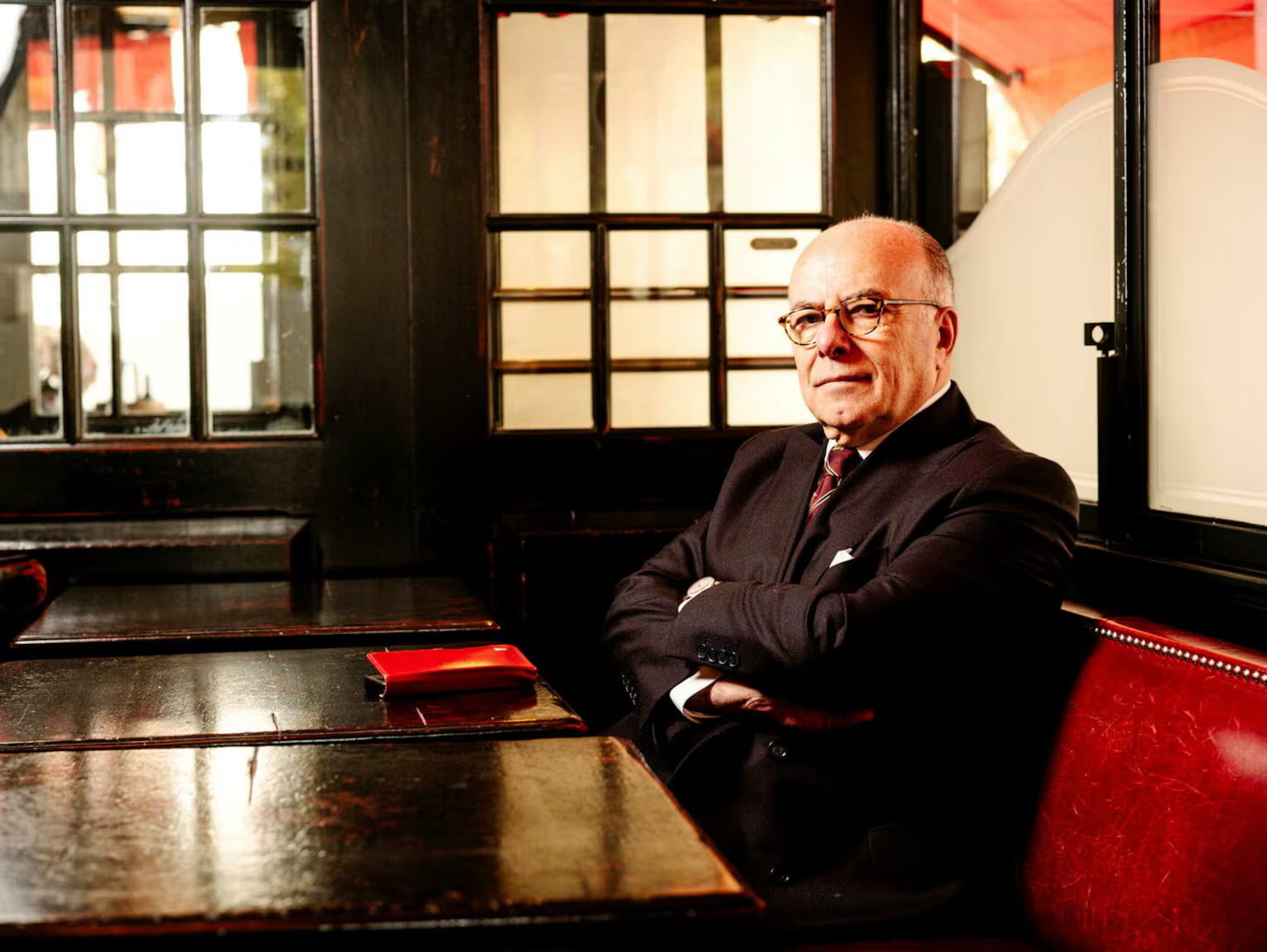
Former Socialist prime minister Bernard Cazeneuve is also a possible candidate, based on taking a giant step toward the traditional right. He has called for “a coalition of committed individuals” excluding the RN and LFI. He added, “There’s no point in breaking the table, overturning it, or climbing on it. We need to sit down around it.” No furniture rearrangement on the deck of the Titanic, then.
None of the PS figures seems at all likely to do more than make up the numbers. But in any case, the party has decided to have a primary vote that includes the possibility of someone from outside the party being its candidate. This is the former commentator, now politician, Raphaël Glucksmann MEP, the founder of the small Place Publique organisation.
A central pillar of Glucksmann's campaign is his refusal to cooperate or form an alliance with Mélenchon. He has explicitly stated that if he wins the primary, the traditional "Union of the Left" under LFI's dominance is totally over.
Glucksmann’s initial plan was that his pre-campaign would generate enough interest and momentum for his popularity to rise steadily, eventually making him the obvious choice for the PS, despite all the reservations of its leadership.
This hasn’t happened, so he has agreed to the primary.
None of these candidates offers any way forward. Far from being a dam against Le Pen, they smooth the way for the fascists’ growth because their pro-corporate and pro-imperialist rule angers millions of ordinary people. This creates a fertile ground for the RN’s advance.
The Macronite rump
Who will emerge from the wreckage of Macronism to stand for the “moderate centre”? Two of the failed president’s former prime ministers fancy the role―Édouard Philippe, president of the micro-party Horizons, and Gabriel Attal, president of Renaissance.
A poll at the end of May showed former and present Macron voters are now deeply fragmented. The “heirs” (35 percent) remain loyal to the “centre-right” and will support either Philippe or Attal. Those “tempted by the right” (27 percent) could vote for the traditional conservatives (Les Républicains) or even the RN. Those “tempted by the left” (23 percent) are mainly considering a return to the Socialist Party. Finally, the “disillusioned” (15%) appear disappointed by Macronism and politics in general and could abstain.
The traditional conservative right
In 2022, Les Républicains (LR, The Republicans), the mainstream conservatives, won less than 5 percent of the vote. The RN has gobbled up most of LR’s base.
Three main candidates are currently in the running to be the conservative choice this time: Bruno Retailleau, former Minister of the Interior and president of LR, was chosen by the party members in April 2026. David Lisnard, mayor of Cannes and a proponent of a broad right-wing coalition, is also a hopeful. Xavier Bertrand, an elected Republican who opposes an alliance with the RN, could also run.
Philippe Marlière, professor of French and European Politics at University College London, says, “None of them has the slightest chance of making it to the second round. In the event of an RN victory, will LR support the new far-right government? This is now a conceivable prospect for the (distant) heirs of Gaullism.”
Eric Ciotti, once the LR leader, was removed in June 2024 over his decision to seek an alliance with the fascists. He has now founded a far-right party that acts as a useful ally for Le Pen, reaching into more traditional conservative sections.
The revolutionary left…and some key debates
We are a long way from 2002 when in the first round of the presidential elections the combined strength of far left parties was 10.44 percent (nearly 3 million votes). This was largely made up of 5.7 percent for Arlette Laguiller of Lutte Ouvrière, and 4.3 percent for Olivier Besancenot of the Ligue Communiste Révolutionnaire (the main component of what would become the Nouveau Parti anticapitaliste, NPA, that followed).
This stunning success reflected a much higher level of class struggle and the absence of Mélenchon's left reformism.
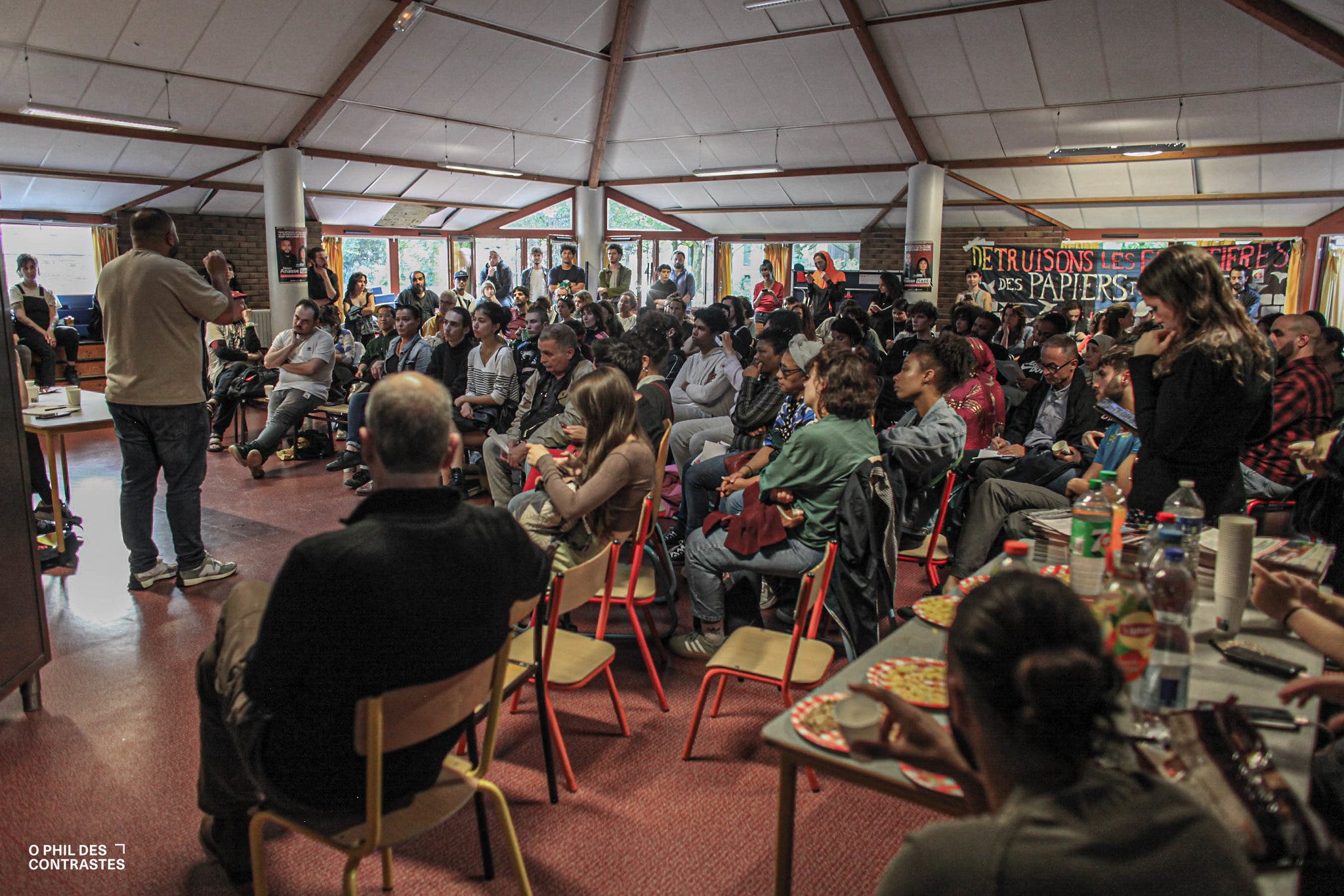
But at least three revolutionary socialist groups are trying to put forward a presidential candidate for 2027―Anasse Kazib of Revolution Permanente, Selma Labib of NPA Revolutionnaires (one of the groups that emerged from the divisions in the NPA), and Nathalie Arthaud of Lutte Ouvrière.
And the Communist Party (who aren’t revolutionaries) held a members’ ballot at the start of this month which voted by 72 percent to 22 percent (6 percent abstentions) to confirm Fabien Roussel as its candidate.
It’s not easy to be an official candidate. To be listed on the first-round ballot, candidates must secure 500 signatures (often called parrainages) from a pool of about 42,000 national or local elected officials such as MPs, mayors and regional councillors. These supporting signatures must come from at least 30 different departments or overseas collectivities (colonial remnants), with no more than a tenth of these signatories from any single department. Got it?
So in the next few months, some revolutionaries will spend many hours criss-crossing the country hunting friendly officials who might be prepared to give them the chance to stand, even if they are a long way from their politics.
Leave the technicalities for a moment; what about the politics?
Firstly, I take it for granted (although I shouldn’t) that if the run-off is Le Pen versus Mélenchon, then revolutionaries―with caveats, warnings and calls to prepare for struggle―should say vote Mélenchon.
This would not be about obliterating his shortcomings or the wretchedness of reformism. But it would clearly put the LFI to the test, and a Mélenchon win would terrify the ruling class, be a massive setback for the fascists and in all probability would encourage more struggle from below, which is the real source of hope and progress.
But what about running in the first round? Let’s put this at its toughest. What if the first round result was something like:
Le Pen 30 percent
Philippe 19 percent
Mélenchon 18 percent
Glucksmann 10 percent
Retailleau 9 percent
Zemmour 4 percent
Tondelier 4 percent
Roussel 2 percent
Arthaud 2 percent
Kazib 1 percent
Le Pen and Phillipe would go through to the run-off. It might be said afterwards that if the far left and the Communist Party had not stood, and their voters had backed Mélenchon, then Mélenchon would have been in the run-off rather than right-winger Philippe.
Indeed, you can argue that the decision of the far left to stand is what DID exclude Mélenchon in 2022. Mélenchon was 420,000 votes short of reaching the run-off. The Communist Party on its own took over 800,000 votes and the revolutionaries achieved more than 450,000. Of course this makes assumptions about whether people would vote at all if there weren’t a far left candidate, but you can see the strength of the analysis.
As early as May this year, Mélenchon asked the Communists, “Are you going to start doing what you did last time? Are you going to start thinking again that you don’t want to help me reach the second round?”3
And some Communists, including senior figures, are doubtful about running themselves. “I don’t understand this stubbornness,” said Stéphane Peu, president of the Communist group in the National Assembly. “The situation is different from 2022, when Roussel wanted at all costs to distinguish himself from Mélenchon. The aspiration for unity among our electorate is much stronger. The major issue will be the risk of the far right coming to power and the left’s ability to get a candidate into the second round.”
The other half of the NPA split (the one that publishes L’Anticapitaliste), is NOT running. It says, “In view of the danger posed by the far right, we will not present a candidacy in the presidential election. We will work toward building a broad, anti-fascist front and a unifying candidacy for the radical left.”
But revolutionaries should not just roll over when faced with the “everyone behind Mélenchon” argument.
Mélenchon is not a slightly imperfect version of the politics we need. He comes from a wholly different viewpoint, obsessed with elections and voting, working inside the system and always ready to make compromises with capital. It follows that revolutionaries should seek every opportunity to argue for the politics of struggle and extra-parliamentary resistance. As Kazib put it, “The world of work was the first opposition to Macron since 2017. Today, it is on the front lines of the crisis.
“Yet, it is invisible in political debates and in the upcoming election. I am happy to announce that with RP I am a candidate in the presidential election to give voice to the new working class, defend its interests against the great capitalist fortunes, and carry an anti-capitalist program to confront the era of crisis and wars that has opened up. Let’s bring the class struggle into this election.”
If the argument is that nothing must risk the victory of Le Pen, then the polls show that Mélenchon is not the best candidate to do this. Instead, the “experts”, the PS and the liberals say that a more “moderate” candidate can attract wider support and defeat the RN. The “divisive” Mélenchon, they say, will put the fascist in the Élysée Palace, the president’s official residence. We don’t accept this as fixed, or the wider categories of the debate, but the argument is real.
All of this rests on the static, narrow elements of bourgeois political analysis. We have to go beyond polls and where we are now. Mélenchon’s supporters rightly say he is ahead of where he was at the same point in 2022, and can advance further. And far from risking a Le Pen victory, he is the only one who can deliver a left victory because he offers a positive alternative to the millions who hate the present set-up. Remember that neoliberal Hillary Clinton could not defeat Donald Trump in the 2016 US presidential election. Perhaps Bernie Sanders, who called himself a socialist and spoke to people’s bitterness, might have done.
The “anyone but Le Pen, hold your nose and even vote for the Tories if necessary” argument is deeply flawed. Socialist Worker has rightly opposed it from when it first appeared in 2002. As Paul McGarr wrote at the time, “[Jean-Marie] Le Pen feeds off the widespread feeling that all established parties are rotten and corrupt…Telling people that the answer is [conservative] Jacques Chirac, who is up to his neck in scandals shocking even by the standards of establishment politicians, would be disastrous….Le Pen also feeds off the real bitterness and pools of despair in society that establishment parties have created through their policies.
“Offering simply more of the Tory policies that Chirac pushes will not offer any hope or alternative to those who abstained on Sunday or who were conned into voting for Le Pen. Only mass protest can do that by showing how ordinary people can take matters into their own hands, challenging Le Pen but also pointing to how society itself could be transformed.” Socialist Worker put forward a similar line when it was Macron versus Marine Le Pen
What do you think?
The broader context
The immediate crisis is that capitalism is in deep trouble and has no answers for the vast majority of people, or a way to guarantee stable profitability. Mainstream parties are derided, and the bosses don’t have a candidate they can unite around.
They hoped Macron would tame the working class and modernise the state. He failed.
A helpful article from the left website Mediapart describes the bosses’ frustrations and their wishes: “The new presidency, especially if it benefits from a right-wing and far-right majority in the Assembly, must be, according to the most radicalised fringe of the employers, an opportunity to bring down what remains of the French welfare state. Following attacks on public services, the unemployment insurance system and aid to the most precarious, pensions and health are in the crosshairs.”
It goes on: “If there is one subject that is unanimously accepted by employers, it is the detestation of Emmanuel Macron. Their current hatred is equal to the fascination he exerted on them in his early days. All of them consider that he is responsible for “a bankrupt France”. All of them want to turn the page on these ten years of a “calamitous” presidency.
“However, the head of state has given them a lot during his two terms in office. From taxation on capital to the reduction of contributions and an unparalleled distribution of public money to companies – 211 billion euros, according to a Senate report – everything they asked for was granted to them.
“Clearing themselves of any responsibility, the employers believe that if the supply-side policy has not borne fruit, it is not because it is wrong, but because it has been insufficiently applied. ‘Macron has made budgetary reforms, but within limits without ever going all the way,’ analyses a business leader.”
Many bosses now think the only solution is more determined confrontation, perhaps with Le Pen in charge. They point out that Giorgia Meloni, the fascist Italian prime minister, inherited a budget deficit up at 8.1 percent of GDP in 2022. She imposed austerity backed by racist scapegoating and attacks on the left, and has reduced the deficit to a projected 2.8 percent of GDP in 2026. As the capitalists see it, what’s not to like?
Of course she generated opposition, which continues, and that’s risky. But perhaps the gamble is needed?
Meloni’s administration is now the longest continuously-serving government in the history of the Italian republic. Under her, Italy is now running a primary budget surplus―where tax revenue exceeds spending before interest costs―while France’s budget deficit has exceeded 5 percent of GDP for four years in a row.
This points to the longer-term battle, which conditions both the immediate and mid-term one. The ruling class has not been able to take on and break working class organisation in the way that Margaret Thatcher did in Britain and Ronald Reagan in the United States in the 1980s.
French workers have suffered some defeats and seen reductions in their living standards and rights in the last 40 years. However, these have not been nearly decisive enough for the ruling class. In 1995, for example, facing assaults on their pensions and other attacks, two million workers struck and shattered the austerity programme of the government headed by Alain Juppé.
In the last ten years, a series of struggles has underlined the resilience of the working class. The fight against the anti-union Khomri law in 2016 saw months of strikes and large demonstrations. The movement also sparked the youth-led occupation of public spaces under the banner of “Nuit Debout!” (Up All Night). This was followed by the massive 2018 railway workers’ strike, the explosion of the Yellow Vest movement from the end of 2018, the pension battles of 2019 and 2023 and the uprising in working class neighbourhoods after the police murder of Nahel M. In 2025, struggle returned again with a major strike on 10 September.
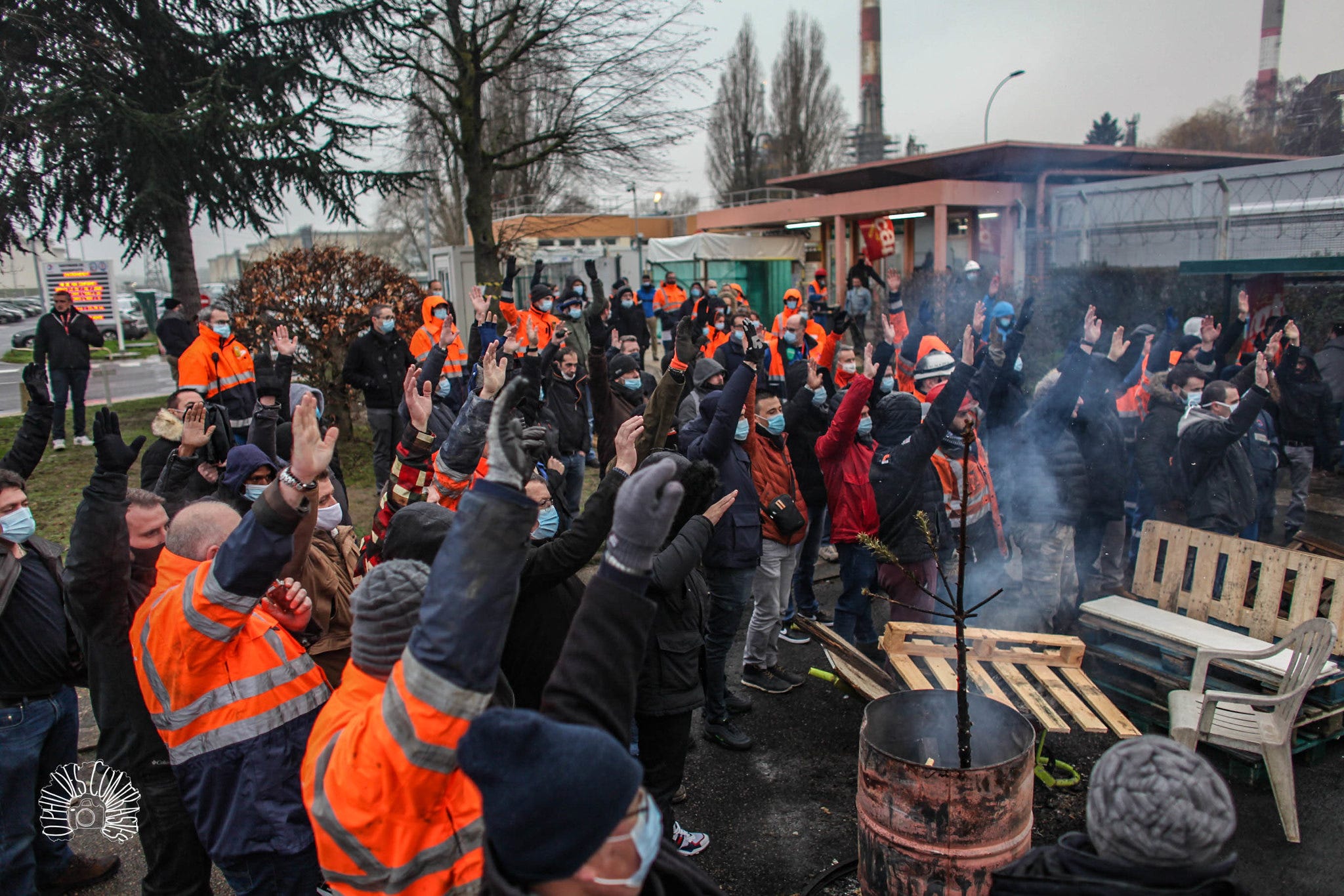
Each time, workers have confronted government plans designed to slash workers’ living standards and weaken union resistance. Ministers have often had to make concessions, but workers have not secured the clear victory achieved in 1995, which can shift the balance of class forces and boost confidence among millions.
Instead, the ruling class and the politicians who serve them have returned again and again to the fray. They have used the ideological weapon of the “need to deal with the debt” to browbeat other political forces, which have mostly conceded to this capitalist reasoning. There has been far too little questioning of how such debts emerge, the links to the bond market, the obscene wealth of the richest, and why there can be endless cash for war and repression but not for workers’ wages and key services.
These are the issues that have to be addressed, whatever happens in the election.
For the sake of clarity, these are my views, not necessarily those of any organisation in France or elsewhere!
https://www.revolutionpermanente.fr/Marine-le-Pen-devant-le-MEDEF-une-operation-seduction-dans-les-pas-du-macronisme